
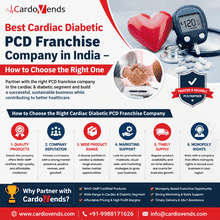
A cardiac diabetic PCD franchise is a business partnership where a pharma company grants an individual or firm the rights to market and distribute its cardiac and antidiabetic medicine range under monopoly-based distribution rights in a defined territory. The best cardiac diabetic pcd franchise partners are WHO-GMP/WHO-GLP certified, offer a wide product basket covering cardiac, diabetic, and combination molecules, and provide transparent pricing with reliable supply chains. Before signing up with any company, check the certifications, terms of monopoly in writing and the performance of the on ground delivery.
Opting for a cardiac diabetic pharma franchise is not a small decision but a long term business bet on the fastest growing therapeutic segment of India. In this guide we’ll tell you exactly what to look for, what to avoid and how the numbers really work.
What Is a Cardiac Diabetic PCD Franchise?
A cardiac-diabetic PCD franchise is a Propaganda-Cum-Distribution (PCD) model for cardiac and diabetic medicines. The franchisee is given the right to sell the parent company’s branded cardiac diabetic products franchise in a particular city, district, or state—usually with monopoly protection, i.e., no second franchisee is given rights in the same area.
This is not a general pharma franchise but therapy specific. That focus lets franchise partners build deep relationships with cardiologists, diabetologists, and endocrinologists rather than spreading thin across dozens of unrelated specialties.
Why This Niche Is Growing in India?
India is often called the ‘diabetes capital of the world’ and the numbers speak for themselves. The ICMR-INDIAB study published in The Lancet Diabetes & Endocrinology estimated that there were 101 million people with diabetes and 136 million with prediabetes in India in 2023.
This single data point is the reason why cardiac diabetic PCD companies are growing at 15-20% YoY in Tier 2 and Tier 3 cities. Heart disease and diabetes tend to go together, so a franchise that offers products in both areas will have a much bigger base of repeat patients than a one-therapy business.
Difference Between General PCD and Cardiac Diabetic PCD
| Difference | General PCD Franchise | Cardiac Diabetic PCD Franchise |
|---|---|---|
| Product Range | Broad — antibiotics, painkillers, vitamins, etc. | Focused — cardiac, antidiabetic, combination drugs |
| Doctor Base | General physicians, multiple specialties | Cardiologists, diabetologists, endocrinologists |
| Repeat Prescriptions | Moderate | High (chronic, lifelong medication) |
| Customer Loyalty | Variable | Strong, due to long-term treatment cycles |
| Growth Potential | Steady | High, driven by lifestyle disease trends |
Why Cardiac & Diabetic Segment a High-Growth Pharma Opportunity?
Rising Lifestyle Disease Burden in India
Sedentary lifestyles, urban diets, and rising obesity have pushed cardiac and diabetic conditions well beyond the older population. The World Health Organization says cardiovascular diseases are the leading cause of death in India, accounting for some 27% of all deaths.
This is no passing fad. Chronic disease management is lifelong medication and that is what makes this segment attractive for a cardiac and diabetic PCD company which is looking for repeat business and not one-time sales.
Market Size & Demand Trends
The growth of anti diabetic products in pcd company in India has been higher than the overall growth of the pharma industry. The growth has been supported by increasing diagnosis and growing health insurance coverage.
| Metric | Approximate Figure |
|---|---|
| Diabetic population (India, 2023) | 101 million (ICMR-INDIAB) |
| Prediabetic population | 136 million |
| Cardiovascular disease share of deaths | ~27% (WHO) |
| Cardiac + diabetic drug segment growth | 12-15% CAGR (industry estimates) |
| PCD pharma sector overall growth | 10-12% CAGR |
Top cardiac diabetic pcd companies in india is growing faster than the overall Indian pharma franchise industry as chronic disease patients are generally not known to discontinue once diagnosed.
Key Criteria to Choose the Best Cardiac Diabetic PCD Company
Use this checklist before shortlisting any cardiac diabetic franchise company:
- WHO-GMP & WHO-GLP certification of the manufacturing unit
- Product range width — cardiac, diabetic, and fixed-dose combinations
- Monopoly rights clearly defined in a written agreement
- Transparent pricing, margins, and investment requirements
- Promotional input support — visual aids, MR bags, samples, literature
- On-time delivery and supply chain reliability
- Verified reputation through reviews, client testimonials, and years in operation
WHO-GMP & WHO-GLP Certification
Certification is not negotiable. WHO-GMP shows that the production facility meets international quality standards, while WHO-GLP shows the laboratory testing processes behind each batch.
Request copies of the certificates from the firm and check the name of the certifying body on the internet. A real cardiac diabetic PCD pharma company will not shy away from sharing this documentation.
Product Range & Portfolio Width (Cardiac + Diabetic + Combination)
The best franchise partners have tablets, capsules and combination therapies for hypertension, cholesterol management, insulin resistance and diabetic neuropathy support. A complete range of cardiac and diabetes medicine company means fewer lost prescriptions to competitor brands.
See whether the company is consistently coming out with new molecules and combo formulations. Product stagnation is a silent alarm.
Monopoly Rights Availability
You cannot compete internally within your territory with the same company due to Monopoly rights. The written agreement should specify the exact geographic boundary or boundaries — district-level, city-level, state-level or otherwise — not just verbally.
Pricing, Margins & Investment Requirements
Compare MRP to franchisee rate ratio of at least three companies before making a decision. Typical healthy cardiac diabetic PCD margins are 20-30 % depending on product category and volume commitments.
Promotional Input Support (MR bags, visual aids, samples)
Marketing collateral has a direct impact on how quickly a franchisee can build doctor relationships. Ask specifically what is included – free samples, visual aids, MR bags, product cards and reminder cards – and whether these are free or chargeable.
On-Time Delivery & Supply Chain Reliability
Stock-outs are not affordable for cardiac and diabetic patients. Ask current franchisees about average delivery times and how the company handles urgent or emergency orders.
Company Reputation, Reviews & Client Testimonials
Search the company name with the word “review,” “complaint,” or “fraud.” Before you sign anything, speak with no less than 2 existing franchise partners. This one step will save you from most bad partnerships.
Red Flags to Avoid When Selecting a Cardiac-Diabetic PCD Pharma Franchise
Avoid companies that:
- Refuse to share WHO-GMP/WHO-GLP certificates on request
- Pressure you into large upfront stock purchases before any agreement is signed
- Give verbal monopoly promises but won’t put them in writing
- Have no verifiable physical office or manufacturing address
- Show inconsistent or unrealistic pricing across product categories
- Have little to no online presence, reviews, or traceable history
- Cannot provide references from existing franchise partners
Step-by-Step Process to Start a Cardiac PCD company
- Shortlist 3-5 companies based on certification and product range
- Request the product list, price list, and monopoly policy in writing
- Speak with existing franchise partners for firsthand feedback
- Negotiate margins, minimum order quantity, and promotional support
- Review and sign the franchise agreement carefully
- Place the initial order based on local market demand
- Begin doctor visits and promotional activity in your territory
Document Requirements
Most companies require a GST registration, valid Drug License (wholesale or retail depending on state rules), identity proof and address proof of the place of business.Some also ask for an Udyam/MSME registration for added credibility.
Agreement & Legal Checklist
See the agreement for territory borders, minimum purchase obligations, payment terms, return/expiry policy and termination clauses. Never accept an oral promise for monopoly rights or pricing.
Initial Order & Stock Planning
Begin with a rational first order of your highest demand cardiac and diabetic molecules rather than your entire catalog. This caps capital risk as you evaluate local prescription trends.
Cardiac Diabetic PCD Franchise: Investment & Profit Potential
| Investment Level | Approximate Range | Expected Monthly ROI | Break-Even Timeframe |
|---|---|---|---|
| Small-scale (single city) | ₹50,000 – ₹1.5 lakh | 15-20% | 6-9 months |
| Mid-scale (district-level) | ₹1.5 lakh – ₹4 lakh | 20-25% | 4-7 months |
| Large-scale (state-level) | ₹4 lakh – ₹10 lakh+ | 25-30% | 3-6 months |
Figures are indicative industry estimates and vary by company, region, and product mix. Always request a written cost breakdown before investing.
Comparison Checklist — Evaluate Before You Sign
| Criteria | Why It Matters | What to Ask |
|---|---|---|
| Certifications | Confirms product quality and legal compliance | “Can you share your WHO-GMP/WHO-GLP certificate?” |
| Product Range | Determines prescription coverage | “How many cardiac vs. diabetic SKUs do you carry?” |
| Monopoly Rights | Protects your territory | “Is this monopoly written into the agreement?” |
| Margins | Affects profitability | “What’s the franchisee rate vs. MRP?” |
| Delivery Timeline | Prevents stock-outs | “What’s your average dispatch-to-delivery time?” |
| Promotional Support | Speeds up doctor engagement | “What inputs are free vs. chargeable?” |
| Reputation | Reduces partnership risk | “Can I speak to 2 existing franchise partners?” |
Who Should Consider This Business Opportunity?
For Medical Representatives
MRs are already aware of how doctor relationships work, how prescription cycles work and how territory dynamics work – so converting to running a cardiac pharma franchise is a natural next step and less of a learning curve.
For First-Time Pharma Entrepreneurs
The revenue stream for cardiac and diabetes medications is more stable for first-time business owners because they are chronic, repeat purchase products, unlike general pharmaceutical categories.
For Existing Distributors Looking to Expand
“Distributors already in the logistics and retail relationships can add a cardiac diabetic line to their revenues without having to build infrastructure from scratch.”
Conclusion — Making the Right Choice for Long-Term Growth Cardio Vends
The best cardiac diabetic PCD franchise partnership is not about the least investment or the loudest promises. It is about having a combination of the verified certifications, wide product portfolio, written monopoly rights and a track record of reliable delivery. Franchises such as Cardio Vends that tick all these boxes tend to forge longer term relationships than those competing purely on discounts. Speak to existing partners, read the agreement to the letter and begin with a realistic first order before scaling up.
Pharma entrepreneurs who use this checklist consistently outperform those who go by price alone, because in chronic disease categories, trust and supply reliability drive repeat business far more than short-term discounts.
For related reading, explore our guide on [how to evaluate a PCD pharma company before signing an agreement] and [understanding monopoly rights in pharma franchise contracts].
Frequently Asked Questions
Q1. What is a cardiac diabetic PCD franchise?
A cardiac diabetic PCD franchise is a business model where a pharma company grants an individual or firm monopoly-based rights to market and sell its range of cardiac and diabetic medicines in a given territory for agreed margins and volume commitments.
Q2. Which is the best cardiac diabetic PCD franchise company in India?
There is no one size fits all ‘best’ company – it all depends what’s right for your territory in terms of certification, product range, monopoly terms and pricing. Before you decide, check partner reviews and compare at least 3 WHO-GMP certified companies.
Q3. How do I choose the right cardiac diabetic PCD company?
WHO-GMP/WHO-GLP certification, width of product portfolio, written monopoly rights, transparent margins, reliability of delivery. The single best step in verification is to talk to current franchise partners directly.
Q4. What documents are required to start a cardiac diabetic PCD franchise?
Typically, you will need GST registration, a valid Drug License, proof of identity and address and sometimes an MSME/Udyam registration. Specific requirements vary slightly from state to state and from the franchising company’s own policy.
Q5. How much investment is needed for a cardiac diabetic PCD franchise?
The investment is generally in the range of Rs. 50,000 for a small single city operation to Rs. 10 lakh+ for a state level operation. This amount depends on the size of territory, the range of products you choose and the starting stock.
Q6. Which products are included in a cardiac diabetic range?
Typical coverage includes: Antihypertensives Cholesterol lowering drugs Antiplatelets Oral antidiabetics Insulin support products Fixed dose combination therapies for patients who are managing both conditions together
Q7. Is a cardiac diabetic PCD franchise profitable in India?
Yes – The segment enjoys the increasing burden of lifestyle diseases and chronic, repeat prescription demand in India, which generally supports 20-30% margins when paired with the right company and territory.
Q8. How do I verify if a PCD pharma company is genuine?
Independently verify WHO-GMP/WHO-GLP certificates. Check the physical manufacturing address of the company. Check online reviews or complaints. Talk to at least two existing franchise partners before signing.
Q9. What support does a cardiac diabetic PCD company provide to franchise partners?
Good companies offer promotional materials (visual aids, MR bags, samples), marketing literature, monopoly territory protection and constant supply of products (but the details vary from company to company and agreement to agreement).